Solid Physical Video Feeds for Studio Reliability
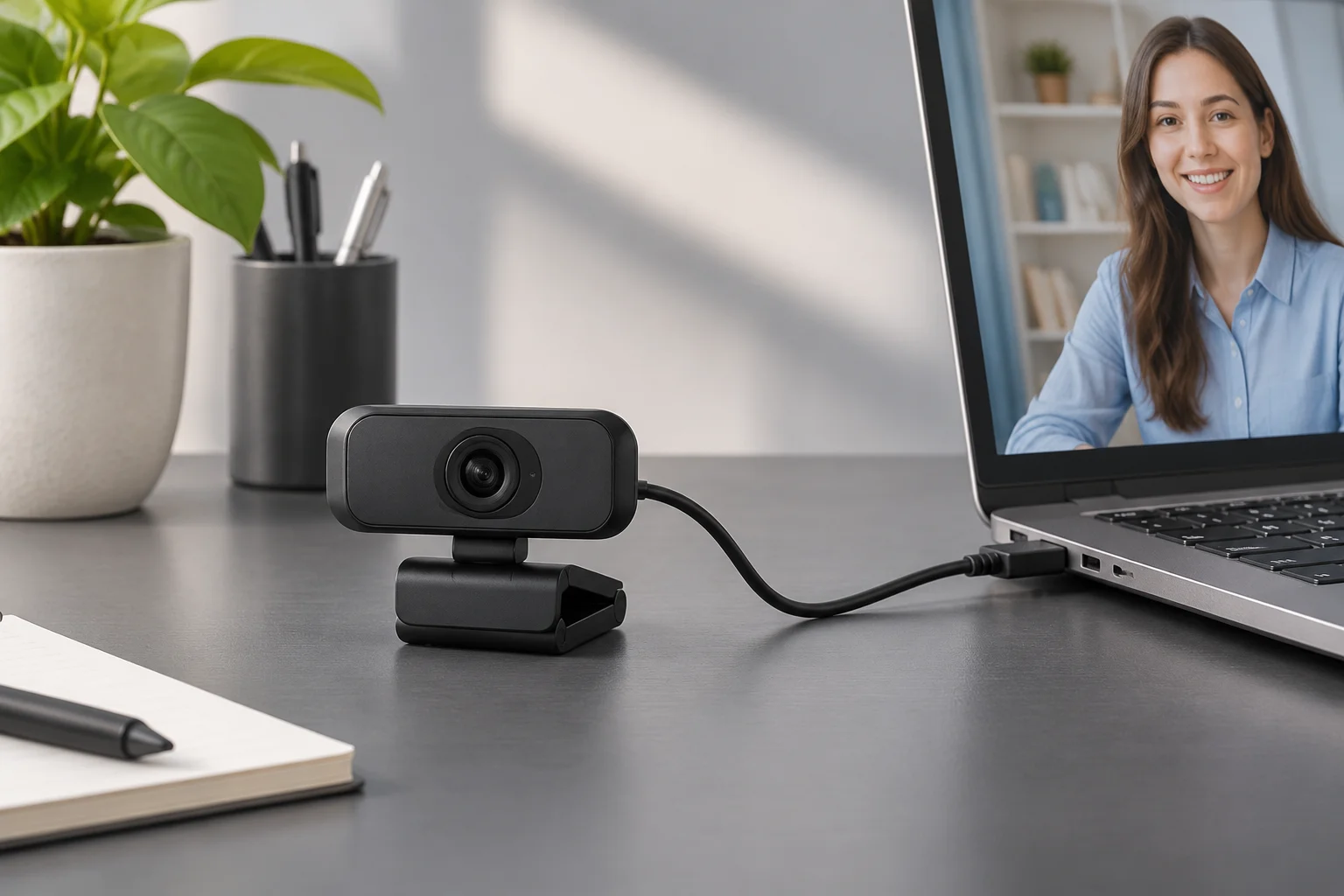
Integrating a specialized USB camera into your broadcast workstation bypasses the unpredictable fluctuations often associated with wireless streaming protocols. Vidora communicates instantly with the operating system kernel via native DirectShow and Universal Video Class drivers, querying camera firmware for supported resolution tables, sensor aspect ratios, and color matrix profiles the moment you insert the cable.
Whether you work with standard high-definition desktop cameras, compact action cameras running through HDMI-to-USB capture dongles, or specialized digital microscope modules, the engine establishes an isolated buffer thread. This architectural separation stops buffer congestion from degrading secondary video sources and ensures your frame pacing stays steady throughout long-form conferences and broadcasts.
Granular Stream Controls and Hardware Encoding
Every hardware sensor communicates using specific sub-sampling codecs. Vidora gives you direct application access to pick between raw uncompressed pixel feeds and compressed data streams, balancing PCIe bus throughput against graphics processor decoding capacity.
Optimizing Pixel Formats and Frame Rates
Choose uncompressed or hardware-decoded stream profiles tailored to your USB controller generation and total system bandwidth.
- Choose raw YUY2 or NV12 streams across USB 3.0 lines for uncompromised chroma fidelity.
- Switch to hardware-accelerated MJPEG decoding when running cameras across legacy USB 2.0 cables.
- Lock hardware stream intervals to exact integers such as 30.00 or 60.00 FPS to remove frame cadence stutter.
Overriding Automatic Sensor Adjustments
Take control over sensor exposure, focal distance, and white balance options instantly from Vidora without using third-party vendor utility apps.
- Lock shutter speed and ISO gain to stop distracting automatic exposure pulsing during lighting shifts.
- Dial in exact Kelvin white balance values to maintain true color accuracy across all studio lighting conditions.
- Store custom hardware calibration presets instantly inside Vidora workspace profiles for immediate switching.
Sound-to-Video Synchronization Engine
Synchronize the integrated USB microphone array with auxiliary external sound interfaces through timestamped hardware clock compensation.
- Ingest integrated stereo microphones with low-latency direct WASAPI sound capture buffers.
- Apply millisecond-accurate sync offset delays to match external XLR preamps and USB mixer consoles.
- Stop cumulative sound drift over multi-hour streaming sessions with automatic sample rate tracking.
Hardware Compatibility Matrix
Vidora supports an expansive spectrum of physical video inputs out of the box, without requiring bundled proprietary drivers.
- Link StandardUSB 3.2 Gen 1, USB-C & High-Speed USB 2.0
- Video Format SupportUncompressed YUY2, NV12, RGB24 & Compressed MJPEG
- Sound Capture Capability44.1 kHz / 48 kHz 24-bit PCM mono & stereo arrays
- Driver ArchitectureDirectShow, Media Foundation & Kernel Streaming
Uncover the Complete Studio Pipeline
Discover multi-camera scene compositing, wireless mobile integration, and unified broadcast recording built into Vidora.